AI agent memory: what agentmemory gets right and wrong
agentmemory is the 28k-star memory layer for AI agents. What it captures, what its benchmarks actually show, and where it falls over, as of September 2026.
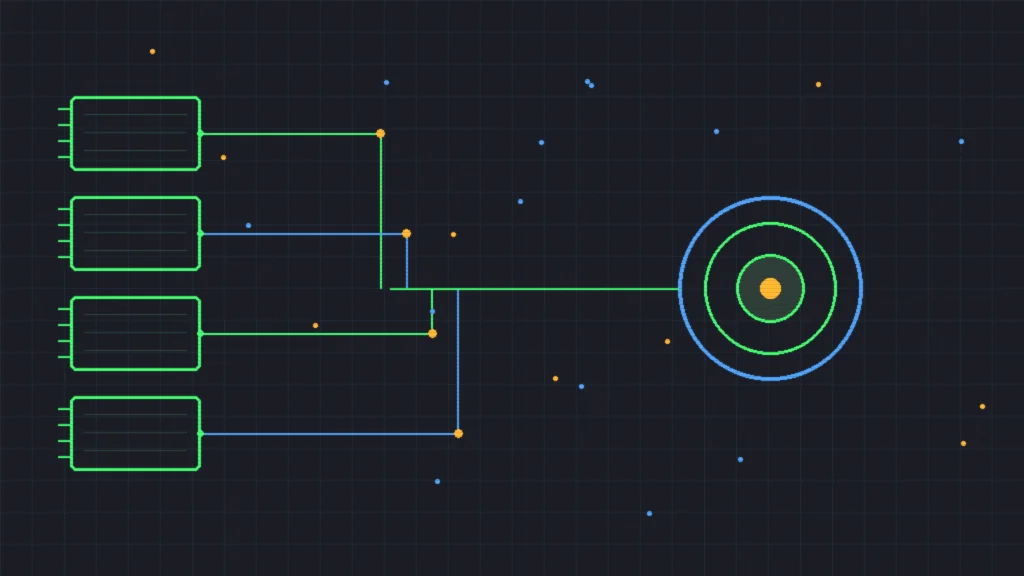
Every agent I run starts each session cold. The reporting agent hears the account structure explained again. The brief generator gets the brand rules repeated, while the cron wrapper re-derives what normal looks like. Persistent memory promises to end the re-explaining, and the loudest repo in that category right now is agentmemory. It had 28,042 stars on September 5, 2026, and it wires into Claude Code, Cursor and any MCP client. Last week this debate hit Hacker News: 191 points on whether agent memory is even a category. I read the docs, the benchmark reports and the issue tracker, all of it dated September 5, 2026. This post is what holds up, what falls over, and what I would wire into a marketing stack.
NoteWhat I verified for this post: the README, both published benchmark reports, the npm registry and the issue tracker. All of it on September 5, 2026. What I haven’t done is run agentmemory in my own builds. Every hands-on claim below is the repo’s, not mine, and the post marks it that way.
What agentmemory actually does
agentmemory is a memory engine plus an MCP server that sits next to your coding agent. Hooks record what happens while the agent works, and every prompt and tool call passes through a capture pipeline. The pipeline deduplicates repeats, strips secrets and API keys, and stores the rest. Retrieval runs over three indexes at once: BM25 keywords, vector embeddings and a knowledge graph. At the next session start the server loads a project profile and injects the top matches under a token budget.
Memories graduate through four tiers, from raw observations up to extracted facts and workflow patterns. Old memories decay and stale ones auto-evict, which is the part that decides whether this works.
WarningThe defaults are leaner than the marketing. Keyless installs run keyword search only, with no vector embeddings, so the demo’s own semantic query can return zero results. LLM-written compression stays off too, unless you add a provider and set AGENTMEMORY_AUTO_COMPRESS=true.
The surface area is large. The default install exposes 54 MCP tools and 12 hooks, plus a viewer that replays any recorded session. Version 0.9.29 shipped on August 16, 2026, and the repo shows activity through August 31. That matters because the loudest criticism of this category comes from an essay in the same debate. Its argument: memory should be a data format, not a multi-stage pipeline. agentmemory is decidedly a pipeline.
What the benchmarks actually show
The benchmark story is the reason this repo trended, so I checked it first. The headline number is real. LongMemEval-S is an academic memory benchmark from ICLR 2025 with 500 questions. On it, the right session lands in the top five 95.2 percent of the time. Without vector search, keyword-only recall scores 86.2 percent. Both rows below were published by the repo itself and read on September 5, 2026.
| System | R@5 | R@10 | MRR |
|---|---|---|---|
| agentmemory (BM25 + vector) | 95.2% | 98.6% | 88.2% |
| agentmemory (BM25 only) | 86.2% | 94.6% | 71.5% |
The repo’s smaller in-house benchmark is the more interesting read. It compares agentmemory against plain grep across 15 recorded sessions, and the gap is thin. Hybrid retrieval finds every relevant session, R@5 of 1.000, against 0.967 for grep. On precision at five, both adapters score 0.240, which the scorecard itself calls the math ceiling for that corpus.
| Adapter | P@5 | R@5 | Hit rate |
|---|---|---|---|
| agentmemory (hybrid) | 0.240 | 1.000 | 15 / 15 |
| grep baseline | 0.227 | 0.967 | 15 / 15 |
Read those two tables together and the story is retrieval, not magic. Vector search buys nine points of recall on the academic benchmark. Against plain grep, the gain narrows to a single missed session in fifteen queries. And none of this measures usefulness, only whether the right session comes back. The repo’s own docs admit the small benchmark cannot separate top adapters, more honesty than most vendor pages. One caveat before the vendor comparisons: the numbers come from different datasets, and several are self-reported. An open issue even shows the comparison docs claiming committed datasets that the gitignore excludes (#1314).
The failure modes hiding in the issue tracker
The gap between marketing and reality is checkable in an open repo, so I went through the recent issue reports. Three recent reports describe failures that stay quiet. A pinned slot block larger than the token budget gets dropped whole instead of truncated (#1333). The agent just loses the context you prioritized, with no error. Knowledge-graph extraction never fires automatically, per a months-old issue still open (#600). On Windows, the env file is never loaded, so integrations fail auth with no obvious cause (#1331).
What makes these worth flagging is the blast radius of memory itself. A broken chart misleads you once; a wrong memory misleads every later session that reads it. The Hacker News thread made the same point from the practitioner side. One poisoned line of memory degrades everything downstream, and several commenters said they prune theirs by hand. agentmemory ships TTL expiry and contradiction detection, but the reports above show the gaps are real.
Where agent memory fits a marketing stack
Strip the developer framing and this is a shared drive with a search bar. The value isn’t storage; it’s ending the re-explaining of things the pile already knows. Map that onto the builds I have shipped, like my n8n agent builds and the MCP reporting pull. A reporting agent that remembers account structure and naming conventions saves the setup paragraph every run. A brief generator that remembers which brand rules matter stops repeating the same two mistakes. An alert watcher gains the most, because remembering what normal looks like lets it calibrate itself over time. That quiet, compounding win is what memory systems are actually for. What doesn’t fit is anything autonomous that writes or spends. My approval-gate rule from the MCP servers post applies doubled here, since a remembered bad decision keeps steering later sessions.
- The same agent job runs weekly or more, with context you re-type every time.
- The job is read-mostly: pulls, briefs, alerts, research.
- You can name what a stale memory would cost you (and it isn’t money).
- A human reviews what gets remembered, at least at the start.
- Secrets stay out of the transcript the memory layer will index.
Adopt or skip: the call
Skip it for one-off automations, where setup cost beats any recall gain. Adopt it when the same job runs on a schedule and the re-explaining tax compounds. Between those poles, the decision is really about maintenance appetite, because auto-captured memory still needs a gardener. The HN skeptics and the repo’s own issue tracker agree on that much. I haven’t wired it into my own cron builds yet, and this review is why. The pieces look right; the hygiene isn’t finished. That matches what I found in my honest test of ChatGPT for marketing: workflow beats model choice.
The Bottom Line
- agentmemory is a real, active memory layer: 28,042 stars, weekly commits, and a reproducible retrieval benchmark.
- The defaults are keyword-only; embeddings, graph features and LLM compression all need opt-ins.
- Retrieval benchmarks measure recall, not usefulness, and the competitor table mixes datasets.
- The issue tracker shows silent gaps: dropped pinned slots, dead graph features, auth failures.
- Adopt for recurring read-heavy agents; skip for one-offs; review what gets remembered either way.
Filed under agents. More in the agents category and about this blog.