Anthropic vs OpenAI marketing workloads: the September read
Both vendors repriced in five weeks: Fable 5.1 held $10, Sol fell to $4, and GPT-6 Astra reset the top. See which stack fits marketing work.
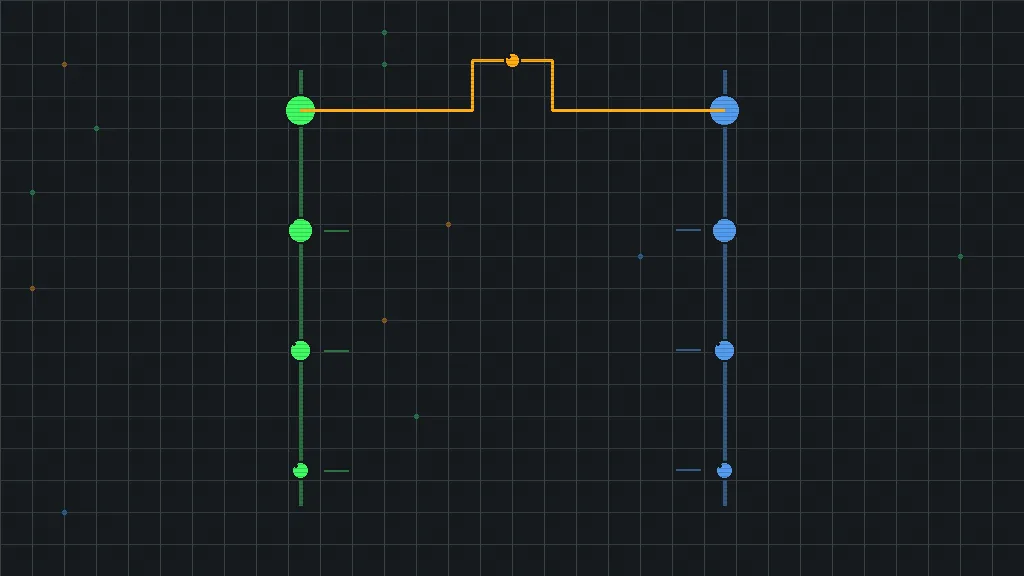
Five weeks this summer reshuffled both AI stacks marketing teams choose between. The September read is simple: the ladders converged. OpenAI launched GPT-6 Astra on September 3 at $10 per million input tokens and $50 output. That is the exact slot Claude Fable 5.1 held eight days earlier at $10/$50. Below each flagship sits a $5-class value tier and a cheap volume tier, on both sides. The shapes match. The September question for a marketing team is no longer which vendor is smarter. It is which ladder slot and which product surface fit each workload, because the prices now rhyme.
NoteDisclosure: this is a docs-and-discourse read, not a benchmark. Prices come from the two vendors’ published pricing pages, checked September 7, 2026. The switching stories come from named Hacker News threads. I have not run a fresh side-by-side test this cycle, so nothing here is framed as my own measurement. Where I map workloads to tiers, the basis is arithmetic on published prices, plus the agent builds I have written about on this site.
The two lineups, as of September 2026
Both vendors now sell the same three-slot ladder, and the table shows it better than any benchmark chart. The slots mirror each other almost line for line. Anthropic’s slots are Fable 5.1, Opus 5 and Sonnet 5. OpenAI’s are GPT-6 Astra, GPT-5.6 Sol and GPT-5.6 Terra, with Luna below Sol for raw volume. Each slot on one side has a near-twin on the other, since both vendors priced to the same buyer.
| Tier | Anthropic model | Price (in / out per MTok) | OpenAI model | Price (in / out per MTok) |
|---|---|---|---|---|
| Frontier | Claude Fable 5.1 | $10 / $50 | GPT-6 Astra | $10 / $50 |
| Value | Claude Opus 5 | $5 / $25 | GPT-5.6 Sol | $4 / $20 |
| Mid | Claude Sonnet 5 | $2 / $10 | GPT-5.6 Terra | $2 / $12 |
| Volume | Claude Haiku 4.5 | $1 / $5 | GPT-5.6 Luna | $0.20 / $1.20 |
Prices come from Anthropic’s pricing page and OpenAI’s pricing page, both checked September 7, 2026. That is the date every number in this post carries. The frontier row is a dead heat, and the value row differs by a dollar. The real gap sits at the volume slot, because Luna undercuts Haiku by five to one on output. One structural difference matters for agent stacks. Anthropic sells a mid-tier Sonnet slot at $2/$10. OpenAI jumps from Terra at $2/$12 straight to Luna, leaving no mid slot for agent drafts.
What the last five weeks actually changed
The news was price and reliability, not capability, because every launch post from both vendors led with cost. OpenAI cut Luna by 80% on July 30, then quietly dropped Sol to a promotional $4/$20. Its pricing page says that rate runs through at least November 21, 2026. GPT-6 Astra arrived September 3 and pulled 2,247 points on Hacker News in four days. That number tells you the attention it got, not how it performs. Anthropic answered two days earlier, when Fable 5.1 kept the $10/$50 price. It cut cache hits from $1.00 to $0.25 per million tokens. Its own thread, 1,415 points, worked through that change.
The output-price lines below are published rates from the two pricing pages, not my measurements. They show where each vendor actually wants you to run, because sticker prices hide the tier strategy.
WarningThese prices are as of September 7, 2026. Both vendors have changed tiers roughly twice a year, and Sol’s $4/$20 is explicitly promotional through November 21, 2026. Re-check both pricing pages before you budget. Stamp your cost sheets with the date you checked.
Opus 5 did not move: it still costs $5/$25 standard, or $2.50/$12.50 on the Batch API. That batch rate is the quiet bargain for async work like bulk tagging or report generation. If you priced a Claude workload in July, your spreadsheet probably still holds.
Where marketing work actually maps
Map the workload, not the vendor, because the tiers match closely enough that the mapping transfers. This table is my judgment, built from published prices and the marketing agent stacks I have run. It is not a benchmark result.
| Marketing workload | Anthropic slot | OpenAI slot | Why |
|---|---|---|---|
| Tagging, categorization, product data cleanup | Haiku 4.5 | Luna | Volume jobs need cheap output, not reasoning |
| Ad copy drafts, briefs, report summaries | Sonnet 5 | Terra | Mid-tier drafting quality at $2-class rates |
| Tool-calling agents, competitor research | Opus 5 | Sol | Reasoning output dominates the bill at $20-25/MTok |
| Async batch jobs | Opus 5 Batch ($2.50/$12.50) | Batch API (50% off) | Same job, half price, slower |
Two pieces I have already published hold up under the new prices. The GPT-5.6 read mapped Terra for drafting and Sol for agents. That mapping stands because the Astra launch did not move the price rows. The Claude Opus 5 read made the same call on Anthropic’s side. The n8n cost breakdown shows how fast output tokens pile up in a real agent stack. That burn rate is exactly why the value-tier rows matter more than the frontier row.
The surfaces matter more than the models
The loudest complaints in August were not about model quality. The benchmark deltas were incremental, as both vendors’ own framing admitted, so the energy went elsewhere. They were about product surfaces and quotas, where both vendors shipped real friction.
OpenAI’s ChatGPT Work bills sessions against the Codex allowance. Practitioners noticed. “I need 100% of my Codex budget,” wrote paytonjjones in a 351-point thread on understanding the product. He called Work “DOA” for his use. The Claude-side complaint ran the other way: verbose output and quota burn. “The Claude Pro is consumed within an hour on a simple task,” one builder reported. The 248-point Codex comparison thread he posted in is full of similar quota complaints. Another builder went the opposite direction after downtime. “I switched from ChatGPT to Claude 3 months ago because my account was down for like 6 hours.”
Reliability drives these exits more than benchmarks do, because a benchmark score never paged anyone at 2am. Anthropic’s “Elevated errors on Claude Opus 5” threads landed in late July. Then a 399-point August 31 thread documented breaking Opus 5’s Auto Mode. The June export-control suspension of Fable 5 and Mythos 5 remains the case study. Three weeks without your frontier model is an eternity in a client quarter. That gap is why I keep arguing for a documented fallback model per workflow. Attribution caveat: all of these are individual practitioner reports on HN, not survey data, and sample sizes of one.
For context on the enterprise race, Claude Cowork grabbed the early lead this year. OpenAI answered with ChatGPT Work in July, which is why the Work threads read as catch-up. My ChatGPT honest test covers the tool side of that question in depth.
What a marketing team should do this quarter
Split the stack by workload and keep an exit plan. The converged ladders make multi-vendor stacks cheap to run, while vendor outages stay expensive to ride out.
- Map your top five marketing workloads to a ladder slot, starting with the cheap ones.
- Date-stamp your cost sheet, and flag Sol’s $4/$20 as promotional with its November 21 boundary.
- Run a two-week parallel test on your own tasks before switching any agent workload.
- Keep client data on paid API or enterprise surfaces, never on free tiers.
- Document a fallback model for every client-facing workflow, on the other vendor’s ladder.
The Bottom Line
- Both ladders converged on the same shape: $10 frontier, $5 value, cheap volume tier.
- The five-week news was pricing, not capability: Sol at $4/$20 promotional, Luna at $0.20, Fable 5.1 cache hits down to $0.25.
- Map workloads to slots, not vendors, because the tiers match within a dollar or two.
- Product surfaces carry the friction: ChatGPT Work’s Codex billing and Claude’s quota burn both drove real switching.
- Keep a documented fallback model, because outages, not benchmarks, are what move teams.
Filed under: Anthropic, OpenAI, AI pricing, Claude vs ChatGPT.